Production Guides · 6 min read
How to Produce an Executive Interview
An executive interview is one of the few productions where you genuinely cannot come back tomorrow. Everything about how it is run should follow from that.
Treat the access window as the hard constraint
For most shoots, time pressure is a budget problem. For an executive interview it is a physics problem: the subject arrives at a fixed moment, and whatever is not already working at that moment will not be working during the interview either.
The consequence is that setup is finished, entirely and not mostly, before the subject arrives. Lighting is rehearsed on a stand-in. Sound is tested and recorded to redundant media. Framing is locked. The window is spent on the conversation, which is the only part that cannot be prepared in advance.
Redundancy is cheap; a lost answer is not
Dual audio recording, a backup camera, and duplicated media are inexpensive relative to the cost of losing a founder's best answer to a card error. On high-stakes interviews these stop being optional extras and become the baseline.
The same logic applies to the room. Two cameras at complementary angles do not just look better; they give the edit somewhere to cut when a great answer contains a long pause or a false start, which great answers frequently do.
Prepare the subject, not just the room
Executives are usually well-briefed and badly prepared: they know the messages and have not thought about the format. A short pre-conversation about how the edit works changes the material substantially: answering in complete statements rather than responding to the question grammatically, tolerating silence at the end of an answer, and being willing to say a thing twice.
It is also worth agreeing in advance which two or three ideas must survive the edit. An interview with a clear priority list produces a usable film; an interview that covers everything evenly produces forty minutes that resist being cut to three.
- Answer in full sentences that stand alone without the question
- Pause briefly before and after key statements to give the edit clean handles
- Agree the two or three ideas that must survive
- Expect to repeat an answer: it is normal, not a failure
Light for credibility, not for drama
The visual register of a corporate interview should signal seriousness and competence. That generally means controlled key light, real separation from the background, and a background that says something true about the company without competing for attention.
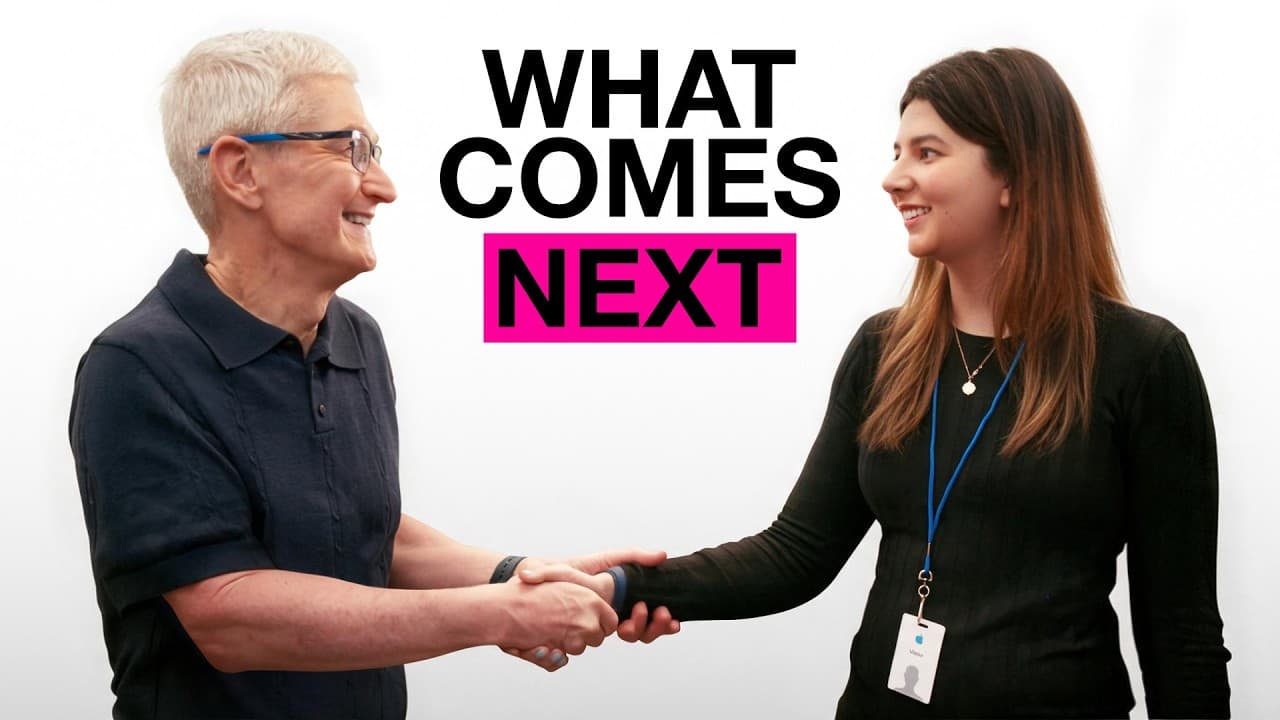
Our interview credits include productions featuring the chief executives of Apple, Rivian, and Boom Supersonic, alongside leadership at IBM. The common factor across those shoots is not a signature look; it is that nothing in the frame distracts from a person explaining something they know well.
Related Work


Keep Reading
Looking for a team rather than a guide? Corporate Video Production Company