Production Guides · 5 min read
Planning One Shoot for Vertical and Horizontal
Your film will run in two shapes: wide on your site, tall in a social feed. Deciding that before the shoot rather than after is the difference between two good films and one good film plus a crop.
Why cropping is visible
A horizontal frame composed for the web puts information at the edges: a product on one side, a face on the other, environment filling the space between. Crop that to a 9:16 vertical and you keep roughly the middle third. Compositions that were deliberate become accidental, and subjects drift off-centre or out of frame entirely.
Audiences may not articulate what is wrong, but they register it. Vertical content that was born vertical simply reads as more confident.
The practical approach: shoot for both at the camera
The efficient method is not shooting everything twice. It is deciding, shot by shot, which format each setup is primarily serving, then framing with the second format's safe area in mind, often with guides enabled in the monitor so the operator can see both crops live.
Some setups are genuinely dual-purpose. Others are worth capturing twice, back to back, with the camera repositioned rather than the whole scene relit. That second pass costs minutes on the day and saves an entire compromised deliverable later.
Pacing differs as much as framing
Vertical social content has a shorter window to establish what it is. The first second carries disproportionate weight, captions frequently do the work of dialogue because sound is off by default, and cuts land faster than they would in a web film.
This is an editorial difference, not just a technical one. Treating the vertical cut as its own edit, with its own opening, pacing, and caption pass, is what separates a native social asset from a squeezed advertisement.
Deciding the deliverable list first
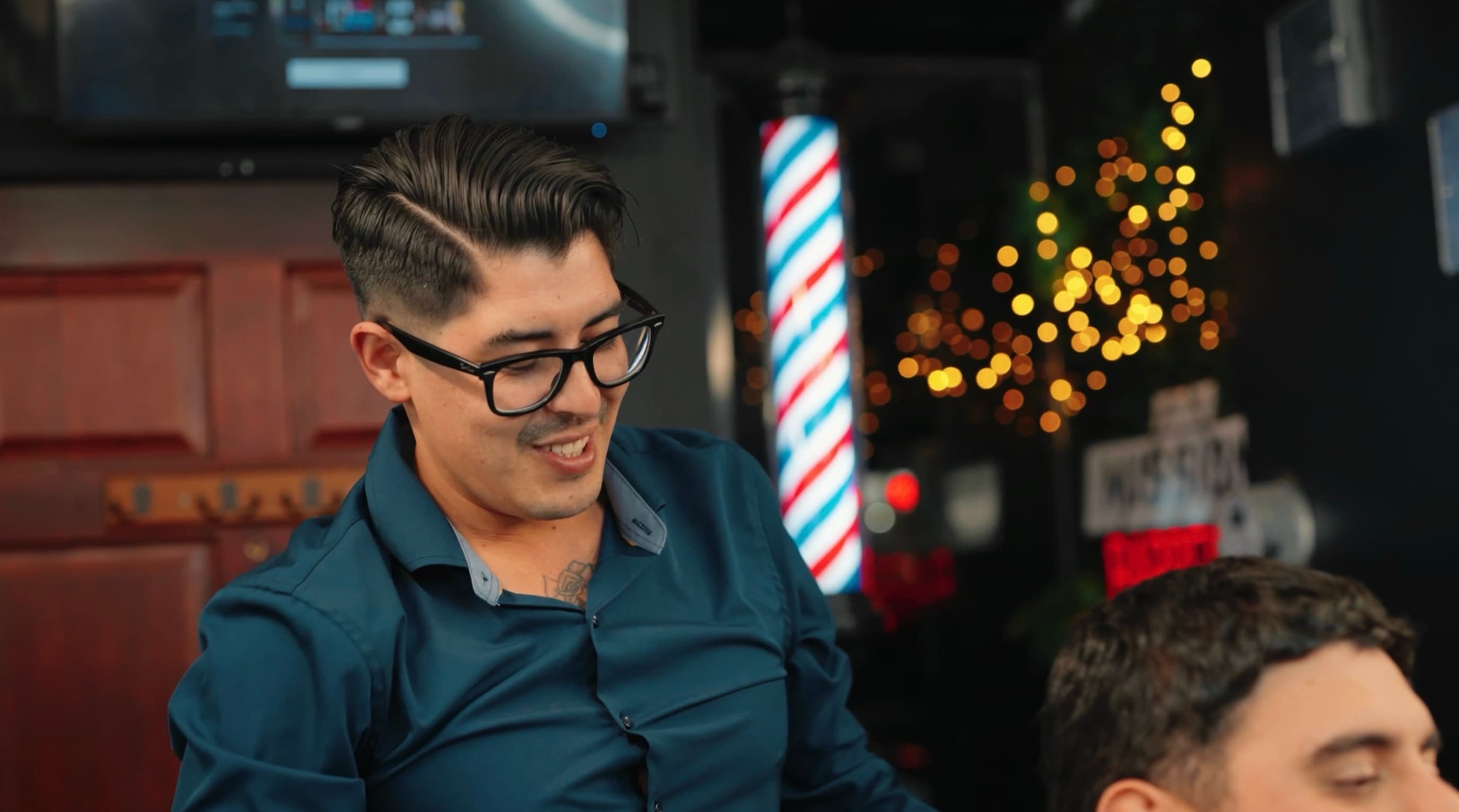
Everything above depends on knowing the placements before the shoot. Our production for Barber Hood is a straightforward example: horizontal brand films for the site alongside a vertical social campaign, planned together, produced in the same days, sharing one visual language across formats.
The question to settle before a camera moves is simply: where will this run, and in what shape? Everything else follows.
Related Work
Keep Reading
Looking for a team rather than a guide? Commercial Video Production